
Re-Roofing a Commercial Building That Stays Open
Most commercial buildings can't simply shut down for a new roof. Production keeps running, customers keep walking in, students keep arriving and trucks keep loading. The good news is that a re-roof doesn't have to mean downtime — with the right planning, the roof can be replaced in stages, around the way your building actually operates.
For businesses across Griffith, the Riverina and regional NSW, the question usually isn't whether a roof can be replaced while you operate — it's how. This guide walks through what good staging looks like, so you know what to expect and what to ask your contractor before the work begins.
- Planning around your operations — your hours, peak periods, access and what's inside the building shape the programme.
- Staging the roof in sections — so only part of the building is ever exposed at one time.
- Separation, safety and communication — between the works, your people and your customers.
Start With How Your Building Operates
A re-roof on an operating building starts with understanding the operation, not the roof. Which areas can't be disturbed? When are your busy periods? Where do deliveries, vehicles and staff move? What is stored or produced underneath? The answers shape the programme — the sequence of work, the working hours and the order sections are done in — before a single sheet comes off.
Staging the Roof in Sections
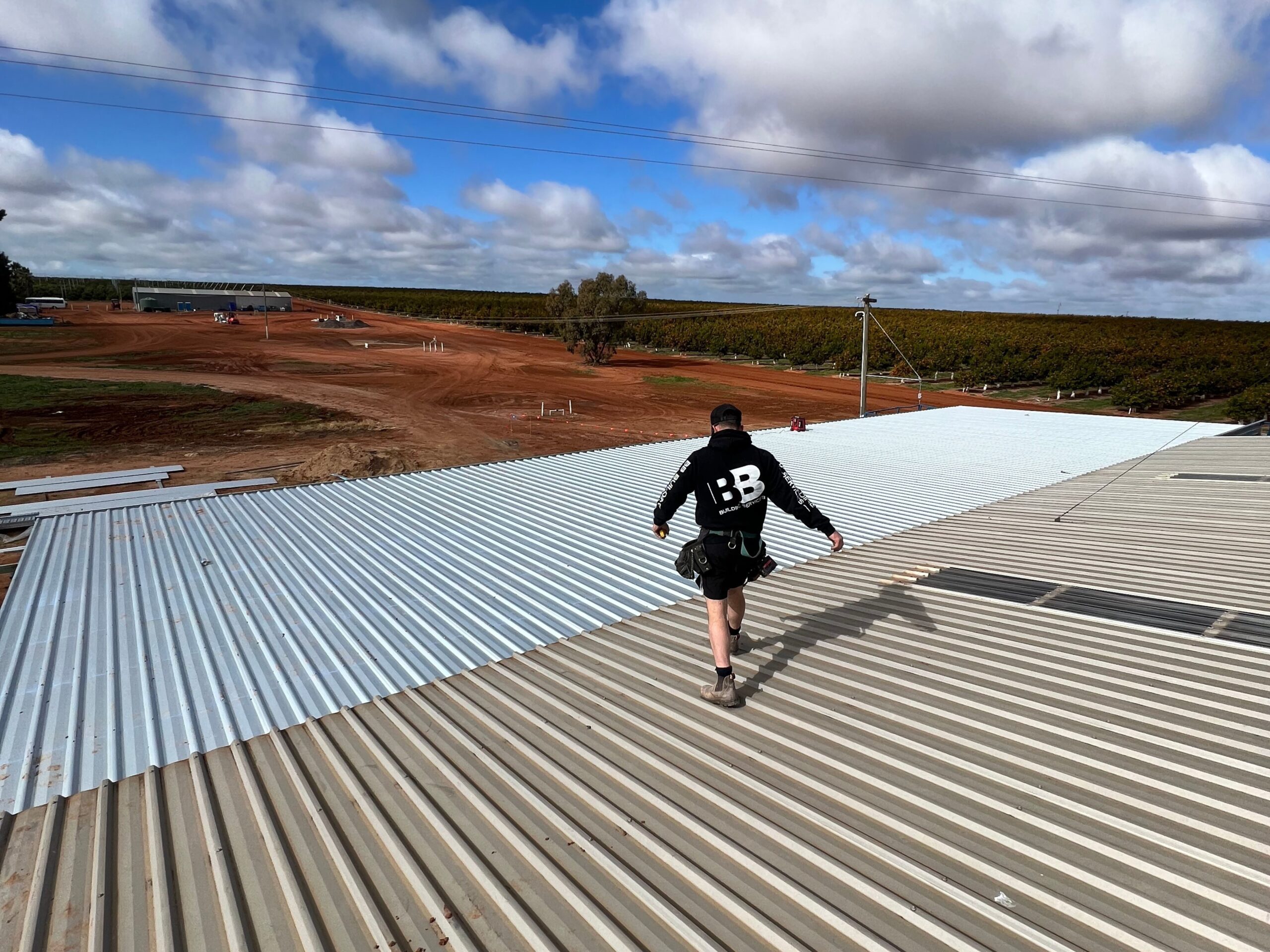
Rather than stripping the whole roof at once, an operating building is re-roofed in sections. Each stage is removed, replaced and made weather-tight before the next one begins, so only part of the roof is open at any time. It also lets you keep using the areas under finished sections, and it keeps weather exposure contained if conditions change mid-project.
An illustrative example — the number and order of stages depend on the building, its use and the weather.
Six Things That Keep Your Business Running
A Programme Built Around Your Operation
Working hours, stage order and access arrangements are agreed with you up front, so the roof work fits around your trading, production or teaching — not the other way around.
Controlled Work Zones
Clearly defined work areas keep construction activity separate from staff, customers and visitors. Where students or the public are on site, that separation is planned in from day one.
Planned Lifts and Deliveries
Crane lifts, material deliveries and waste removal are scheduled around the building's movements, so large or noisy tasks happen when they cause the least disruption.
Safety and Compliance Managed On Site
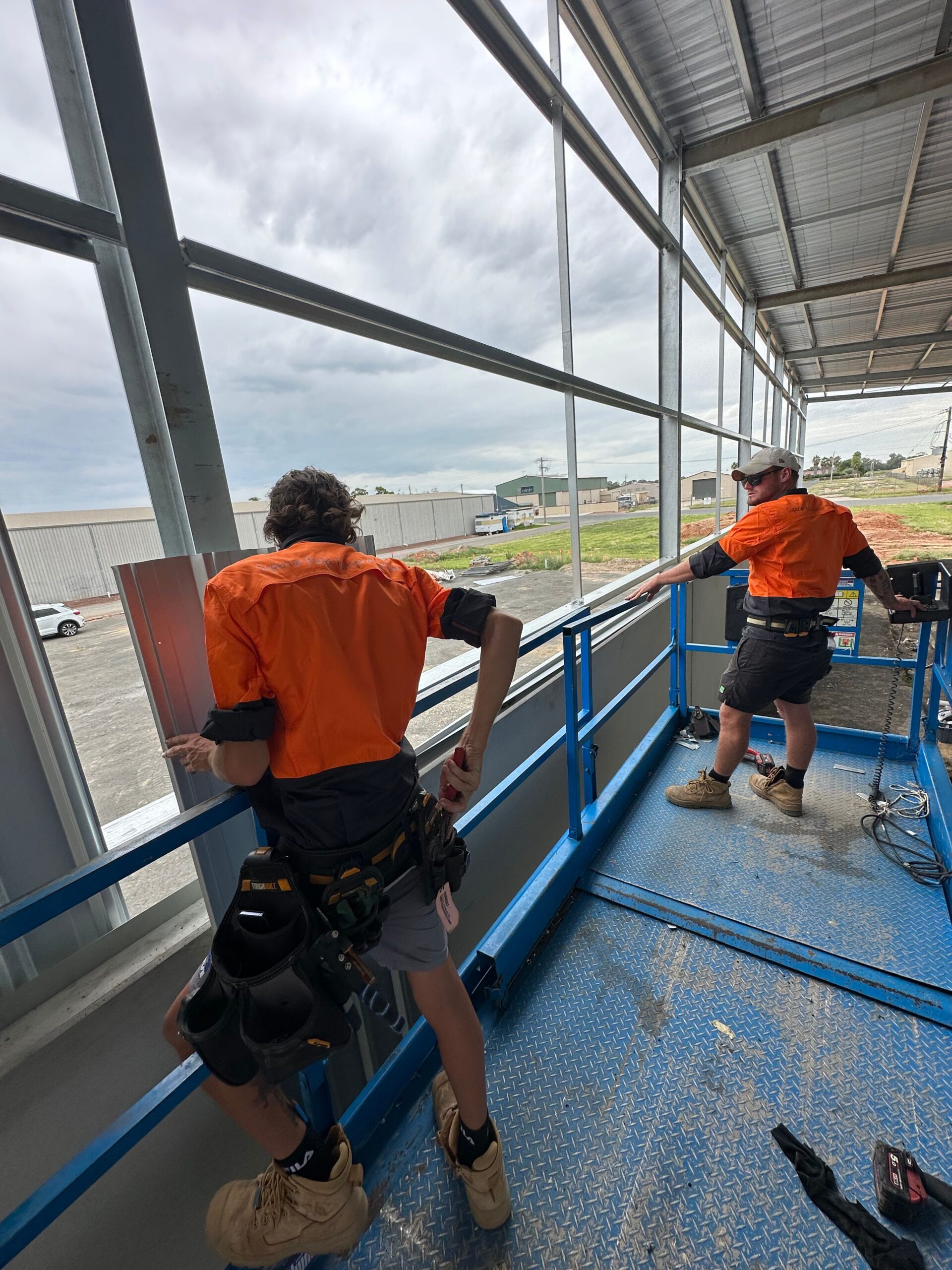
Site-specific safe work method statements, inductions and digital compliance records keep everyone working to the same rules — an essential step when roof work, lifting and live operations share one site.
Dedicated Supervision and Flexible Resourcing
A dedicated supervisor coordinates labour, plant and suppliers, and crew numbers can be adjusted as stages progress — which matters when the programme needs to flex around your peak periods.
Regular Communication and Progressive Inspection
You hear about progress as it happens, and quality is checked stage by stage rather than left until the end — so issues are caught while they're easy to fix.
Roof work involves working at height and lifting, and on an operating site it happens alongside people going about their day. That's why it should be run under site-specific safe work method statements and inductions, in line with the relevant WHS requirements.
On older buildings, roofing materials should also be checked for asbestos before work starts. It's worth confirming your contractor's process for this before you sign anything.
Different Buildings, Different Priorities
The principles are the same, but what matters most changes with the building. Here's what staging typically focuses on:
| Building type | What staging focuses on |
|---|---|
| Retail / commercial premises | Customer access, noise, and keeping entries and frontages clear |
| Food processing / production | Hygiene and access requirements, and working around production schedules |
| Schools / education | Separating works from students and staff, and timing around the school calendar |
| Grain / agricultural depots | Vehicle and plant movements, access, and seasonal peak periods |
| Warehouses / distribution | Loading dock access and keeping trucks and forklifts moving |
Experience in Live Environments
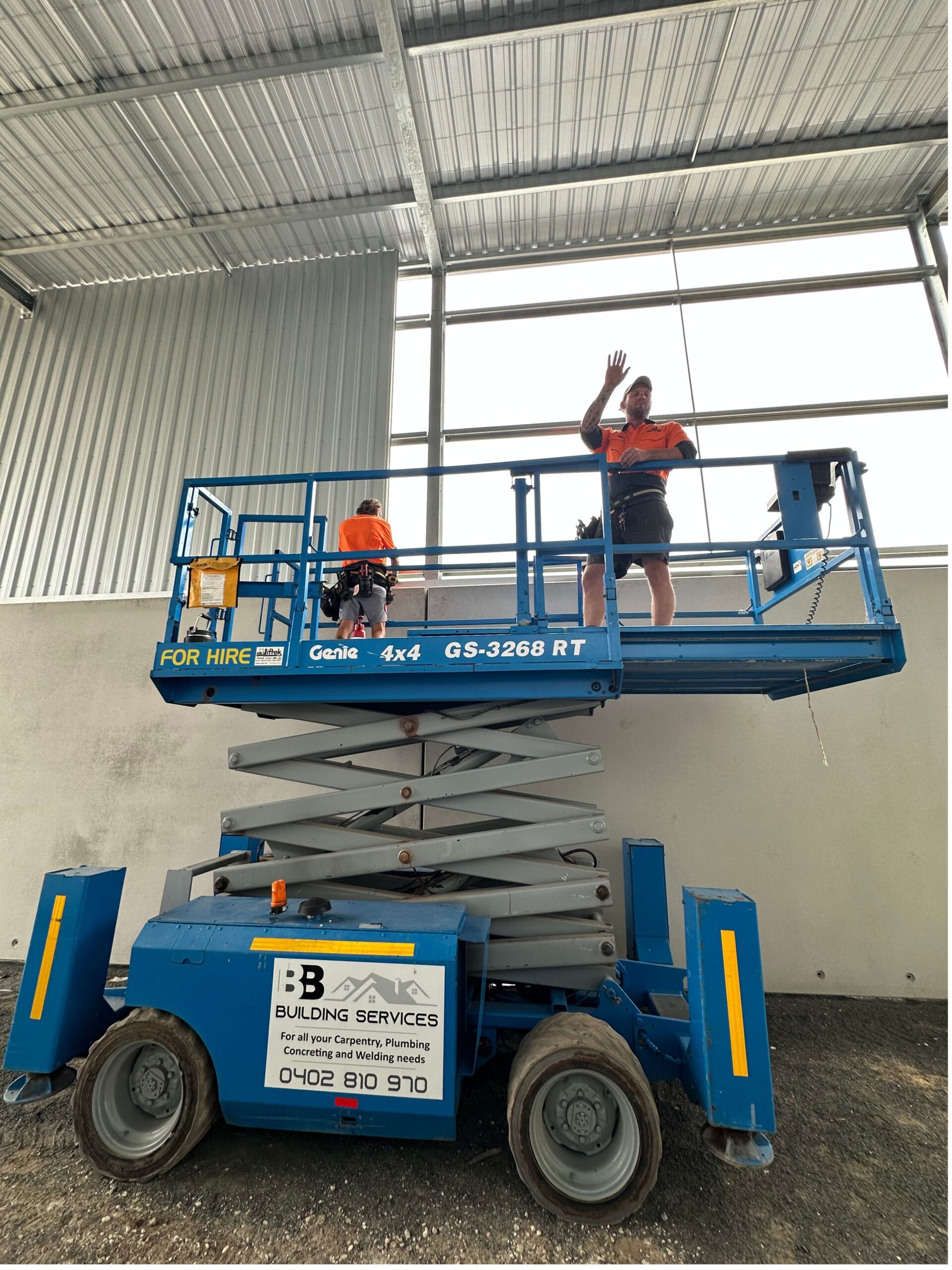
BB Building Services has delivered roofing and building works inside live food-processing, grain-handling, retail and education environments across regional NSW. Working in operating buildings calls for systems as much as skill — supervision, compliance, staging and communication — and those systems are what keep a re-roof from becoming a disruption.
A good contractor will answer these easily. If they can't, it's worth asking why.
A building doesn't have to stop for a new roof. With a staged programme, controlled work zones, planned lifts and clear communication, a re-roof can be delivered while your business keeps running. The difference is planning — and a contractor with experience doing it in live environments.
Plan the Re-Roof Around Your Business
If your roof is due for replacement but you can't afford to stop trading, the smartest first step is a conversation about how the work would be staged around your operation — before any quote is signed.
Commercial Re-Roofing Across the Riverina & Regional NSW
BB Building Services plans commercial and industrial re-roofing around how your building operates — with dedicated supervision, staged delivery and clear communication from start to finish. Tell us about your building and let's work out the right approach.
Request A Free Quote