Commercial Roof Reports Explained
A commercial roof is one of your building's biggest and most expensive assets — yet it's the part you can't see from the ground. A commercial roof report gives you a clear, professional picture of its condition, so you can make informed decisions instead of waiting for a leak to make them for you.
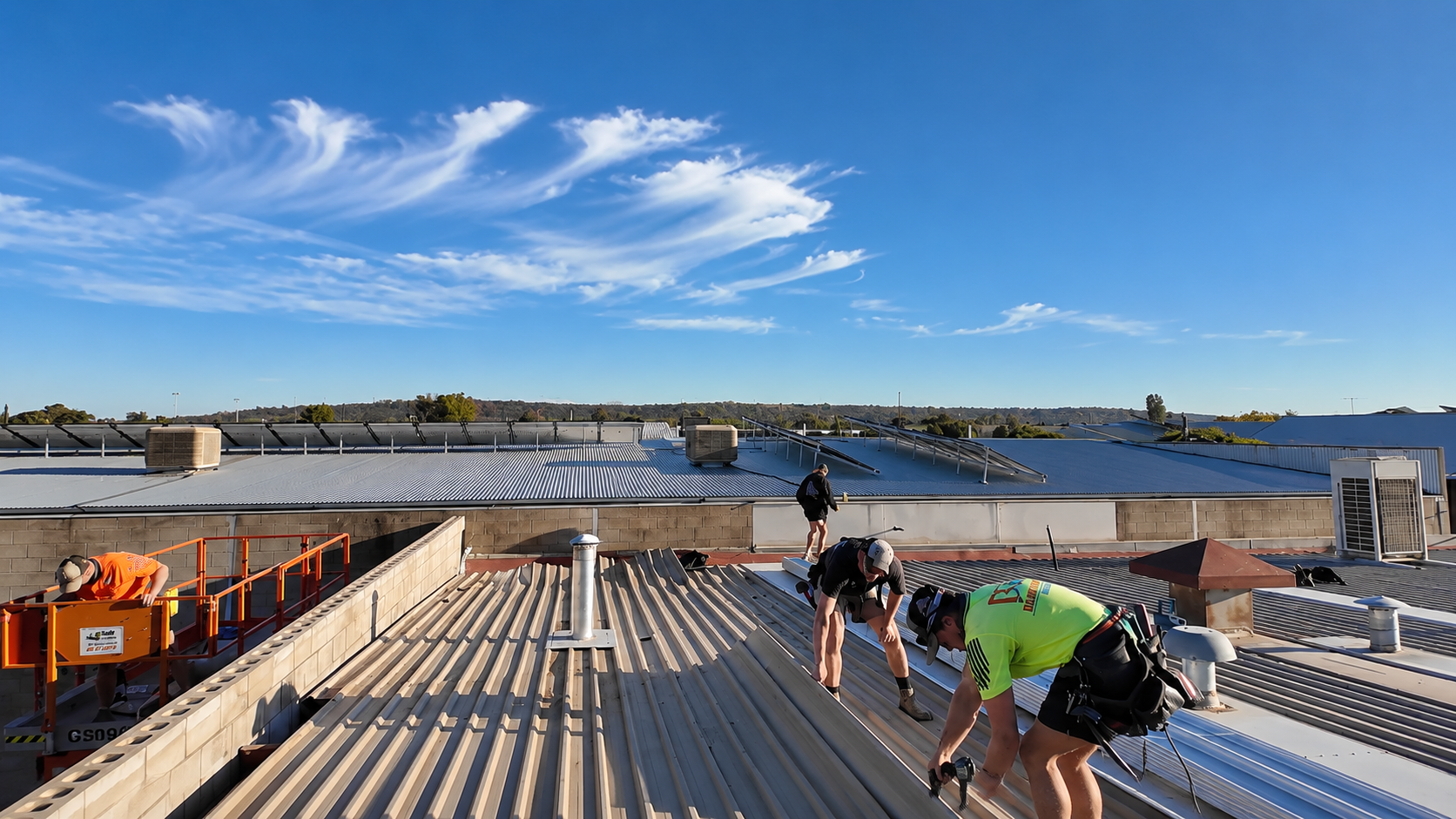
Whether you own or manage a warehouse, factory, retail premises, or agricultural facility across Griffith, the Riverina, or regional NSW, a roof report turns guesswork into a plan. It tells you what shape your roof is in, what needs attention, and whether you're looking at maintenance, repair, commercial re-roofing, or a full roof replacement. Here's exactly what these reports cover and why they matter.
- A documented condition assessment of your commercial or industrial roof, backed by photos.
- A clear list of defects and their priority, so nothing important gets missed.
- Practical recommendations — repair, restore, re-roof, or replace — with realistic timeframes.
What a Good Commercial Roof Report Covers
Roof Description & System
The baseline: the roof type and system (metal or membrane), its approximate age, area, pitch, and how it's accessed. Everything else in the report is measured against this starting point.
Condition of Key Elements
A methodical check of the parts that actually fail — sheeting or membrane, flashings, fasteners and seals, penetrations, ridges and valleys, and the gutters, downpipes, and drainage that keep water moving off the roof.
Defects, Documented with Photos
Every issue is recorded, located on the roof, and rated by severity, so you know what's urgent and what can wait. Clear photographic evidence means you're not taking anyone's word for it.
Moisture & Leak Findings
Where water is getting in or tracking — including problems that aren't obvious from a quick look, such as damage beneath the surface or corrosion starting around fixings and penetrations.
Remaining Service Life
An informed estimate of how much life the roof has left. This is the number that lets you plan capital works properly instead of being caught out by an unexpected failure.
Clear Recommendations & Timeframes
The most valuable part: what to do, in what order, and when — from routine maintenance and targeted repairs through to re-roofing or full replacement, with indicative priorities you can budget around.
Types of Roof Reports
Not every report has the same job. The right one depends on why you need it:
Condition / Inspection
A general health check of the roof's current state and what it needs.
Pre-Purchase / Due Diligence
Know exactly what you're buying before you commit to a commercial property.
Maintenance
Ongoing checks that catch small issues before they become expensive ones.
Dilapidation (Lease)
Documented condition for lease start, end, or make-good obligations.
Insurance & Compliance
Evidence of condition and upkeep for insurers and reporting requirements.
Warranty Inspection
The periodic checks many roof warranties require to stay valid.
A roof report is only as good as the inspection behind it. A professional inspection is carried out safely and in line with NSW work health and safety requirements for working at heights (SafeWork NSW) — not a quick look from the ground — and the roof is assessed against the relevant Australian Standards, including those covering metal roof cladding (AS 1562.1) and roof drainage (AS/NZS 3500.3).
That combination — safe, thorough access and assessment against recognised standards — is what makes a report you can actually rely on for budgeting, an insurance claim, or a property sale.
Why Your Business Needs One
A roof report isn't paperwork for its own sake — it protects your budget and your building. It lets you plan capital works with confidence instead of reacting to emergencies, gives insurers the evidence of condition and maintenance they increasingly ask for, helps keep manufacturer and installer warranties valid, and provides solid due diligence when you're buying, selling, or leasing. Most importantly, it catches small problems early, when they're cheap to fix — long before they turn into leaks, damaged stock, or structural repairs.
If you're seeing any of these, it's worth getting the roof assessed:
- Leaks, damp patches, or water stains inside the building
- Ponding water that won't drain off the roof
- Recent storm, hail, or wind damage
- An ageing roof and no clear idea how much life it has left
- The same areas needing repair again and again
- Visible rust, corrosion, or lifting sheets and flashings
The more boxes you tick, the more a professional roof report is worth arranging.
A roof report is a small, planned investment that protects a very large one. It replaces guesswork with facts, and it puts you in control of when and how you spend on your roof. Better still, when the report points to work that's needed, one team can move straight from inspection to repair, re-roofing, or replacement — with no gap and no finger-pointing.
From Report to Repair — One Team
The real value of a roof report is what happens next. Working with a roofing contractor who can both assess the roof and carry out the recommended work means the findings actually get actioned — and that your commercial or industrial roof keeps protecting your business for years to come.
Commercial Roof Reports & Roofing Across the Riverina & Regional NSW
BB Building Services inspects, reports on, and maintains commercial and industrial roofs across Griffith, the Riverina, and regional New South Wales — from condition reports right through to repair, re-roofing, and replacement. If you need to know where your roof stands, let's arrange a report.
Request A Free Quote